
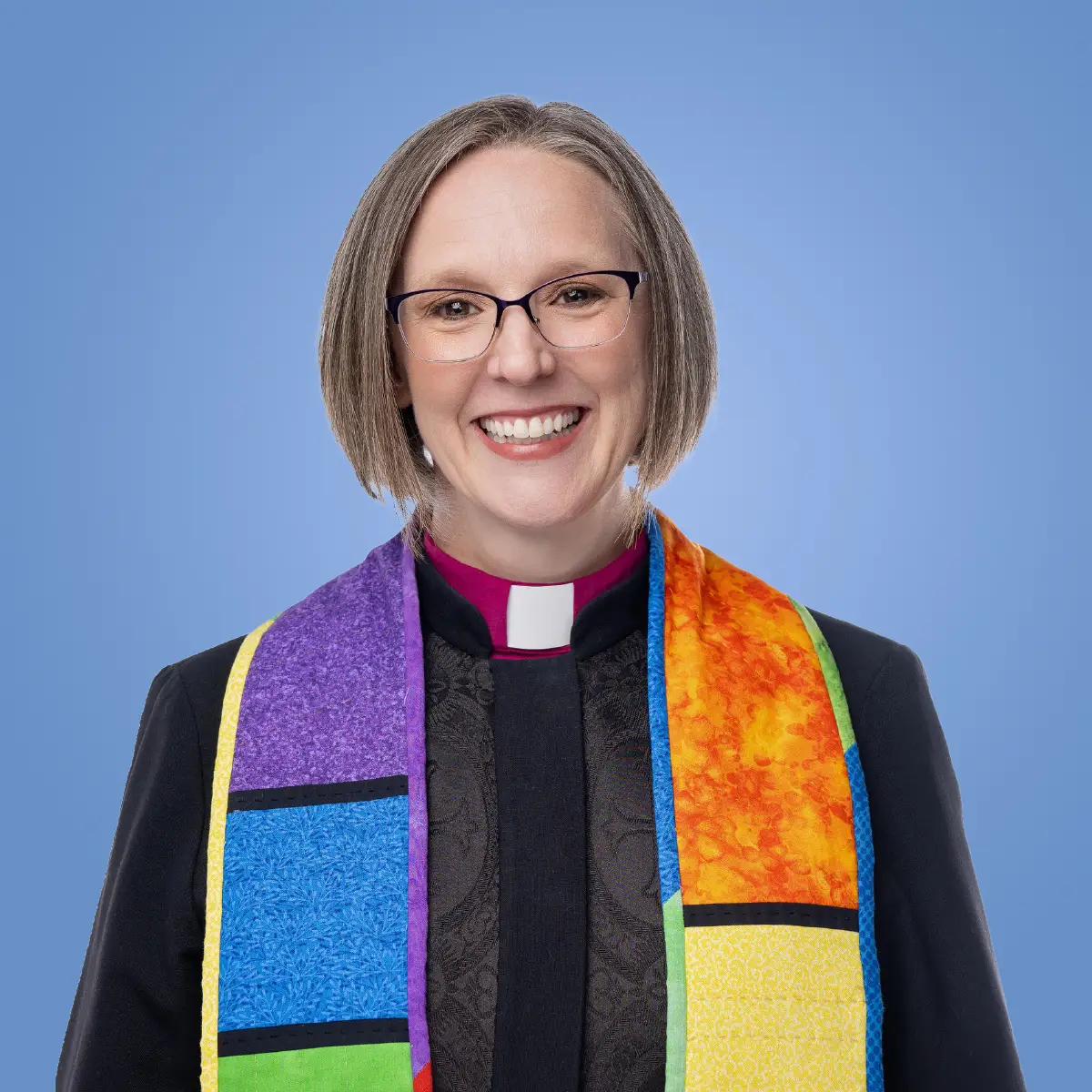
Two weeks ago, I began the story of my first night on call as a student chaplain in the hospital. I had begged my way into the internship program because the program supervisor (in training herself) had deemed me too young and inexperienced at first. After working several daytime shifts in the first week on my assigned floors – the gastroenterology unit and the women’s center – it was time for my first solo overnight in the hospital. That’s where I left you last time – with the beeper staring at me in the chaplain’s on-call sleeping room, taunting my feelings of inadequacy for the holy work in front of me.
I had already gone through the pre-operative census and visited everyone having surgery before 9:00 a.m. in the morning when the rest of the staff chaplains and interns would be back. I had checked in with the ER so that they would know who was on call if or when I’d be called to their department. I had even taken a swing around the labor and delivery floor – because babies. Why not?
Now I was just sitting in this little room waiting for something to happen and wondering what in the world I would do if I was called. It was in this moment that I realized something that has jumped out at me ever since. There are very few depictions of hospital chaplains in pop culture. As I racked my brain through every episode of ER that I had ever seen on TV, hoping to get an idea of what people might expect if I showed up, I couldn’t recall one scene that involved a chaplain. I’d seen a few movies or TV shows where a priest performed last rites, but that was about it. Even today, 20-something years later, the number of hospital chaplains that appear on any of the major medical dramas on TV can be counted on one hand. I had nothing to go on.
I decided I would make a plan. It seemed like a good idea. I was the chaplain, and if I got beeped people were going to expect me to know what to do. I was going to be the expert in the room so I would come in ready to work. I started with the basics; I opened my Bible to Psalm 23 and started to memorize it. I got out a pen and my notebook and began to write some prayers. By the time I went to sleep a little before midnight I was ready. I knew exactly what I would do when I walked into a patient’s room. I was worthy of the name “chaplain.”
I have been really struck by this word “worthy” in the reading from Matthew’s gospel this week. In the story, Jesus sends his twelve disciples out with the authority and ability to cure the sick, raise the dead, cleanse the lepers, and cast out the demons. One of these disciples, the narrator makes sure to point out, will eventually betray Jesus. Another was described as among the spiritually sick that Jesus came to heal. To the whole lot of them he said “you of little faith” when they got scared in a storm on a boat. Yet even still, these are the ones he tells, “Whatever town or village you enter, find out who in it is worthy….” They’re qualified to determine who is worthy?
I find this whole “worthy” bit unsettling on at least two levels. First, it sounds like Matthew might be saying that some people are worthy of the good news and others are not. That does not sit well with me. As we say in some form or fashion every single Sunday when prepare to confess our sinfulness, none of us have or can earn God’s grace. “But God proves [divine] love for us in that while we still were sinners Christ died for us.” (Romans 5:8)
Second, the instruction seems to imply or require some sort of judgement. The disciples were supposed to observe the people they meet as they go town to town, village to village and decide from among the people who was worthy. In order to that they would have to judge, and I am very uncomfortable with encouraging human beings to judge the worth of others. Whether it’s Sarah judging Hagar, the servant mother of Abraham’s firstborn son in Genesis, David judging Uriah, the soldier husband of Bathsheba, the woman he violates in 1 Samuel, or in the history of our nation, colonizers judging indigenous people, White people judging Black people, citizens judging immigrants, we humans do not have a good track record at finding worth in others when our own interests feel threatened.
The disciples had been instructed to travel with very little – no extra clothes, no spare sandals or walking stick, no gold or silver or copper, not even a bag for food. When they entered a town their needs were high, their interest in staying safe at the level of urgent. What criteria were they to use to decide who was worthy? When their bellies were grumbling and their feet were aching could they be trusted to make a fair judgement? What exactly would make a household worthy? The ability of its members to meet a prescribed set of needs? Or something completely different?
When that hospital beeper back in Atlanta went off at 2:00 in the morning, I was ready to go. I woke up quickly, straightened my clothes, brushed my teeth, and made a beeline for the elevator. Repeating the 23rd Psalm over and over in my head as the elevator ascended, I was feeling confident about what was coming next. A tragedy had occurred and the family had consented when the nurse asked if they would like a chaplain to be with them. I was that chaplain.
I had studied up and I had a plan. With all the authority of a photo ID name badge, I would introduce myself as the chaplain, I would offer to pray one of my carefully written prayers, and then I would recite the 23rd Psalm. After that I would be ready to answer any and all of their questions about what happens when we die, angels and heaven, and God’s grace for their family. I ignorantly thought I was ready. I had everything they needed whether they knew it yet or not. I was worthy of my beeper.
Arriving at the room, I announced my presence, “Hello! I’m Stephanie, the chaplain on duty tonight. I understand you need me.”
“Uh…. OK,” was as needy as they sounded.
“How about I offer a prayer?”
They agreed unenthusiastically.
And after the “Amen,” I moved on down my checklist and began to recite the 23rd Psalm.
By the time I got to the cup overflowing, I knew I was in trouble. No one would look at me. Everyone in the room was shifting uncomfortably. I was messing this up completely. A nurse who had been in the room monitoring the patient’s comfort level recognized the awkwardness and stepped in when I finished. “Chaplain, may I introduce the Smith family? I think they’d like to tell you about their story.”
Of course. Of course they would. I walked in that room thinking I had all the answers, all the right things to say, all the perfect things to give them, but really what I had brought was what was perfect for me – something to make me feel worthy. What was needed wasn’t a set plan, but an openness to receive what this family had to offer – their stories, their worries, and their grief. I thought I came in with authority. I thought I came in to make things better. I thought I came in with ready answers to hard questions, and that is what made me worthy of the beeper. But that wasn’t it at all.
What were the apostles to look for as they looked for households that were worthy? Were they to look for families that were perfect? Were they to look for families with resources? Were they to look for people who already had the answers, already seemed healthy and whole, already knew where to find new life?
I have to doubt it. Jesus wasn’t all about perfection or riches or easy ready-made answers. And not too long before this he was heard saying, “‘Those who are well have no need of a physician.” The worthy aren’t those who have it all together. Instead the worthy are the ones who will welcome the apostles. The worthy are those who will understand that in welcoming the ones who cure and cleanse, the apostles who cast out and raise up, their eyes will be opened, their assumptions will be challenged, and their lives will be changed. The worthy are the ones who will hear the apostles say, “The kingdom of heaven has come near,” and in hearing will know that this is good news, will know that this good news is for them. The worthy are those who know there is room in their homes, in their hearts, in their spirits for what God’s kin-dom has to offer – grace to those who fall short, peace to those who worry, wisdom to those who are curious, presence for those who are lonely, welcome for those who are on the fringes.
It doesn’t take perfection to be worthy. It doesn’t take wealth or power or status or authority. Being worthy is about humbly welcoming the stranger who might teach you and point out your sickness so that it can be healed, your demons so that they can be cast out. It’s about being open to the people you might meet and the stories you might hear that might challenge your assumptions and change your perspective. It’s about coming to terms with the reality not one of us knows it all or can do it all, but when we are willing to learn, willing to be changed, the kingdom of heaven comes near.